
Local discomfort
Disc-related pain may remain near the neck or lower back and can vary with posture or loading.
Disc Pressure · Chino Hills, CA
A bulging or herniated disc can be painful, but the image on a scan is only one part of the story. Care begins by connecting your symptoms, examination findings, and imaging before deciding whether decompression belongs in your plan.
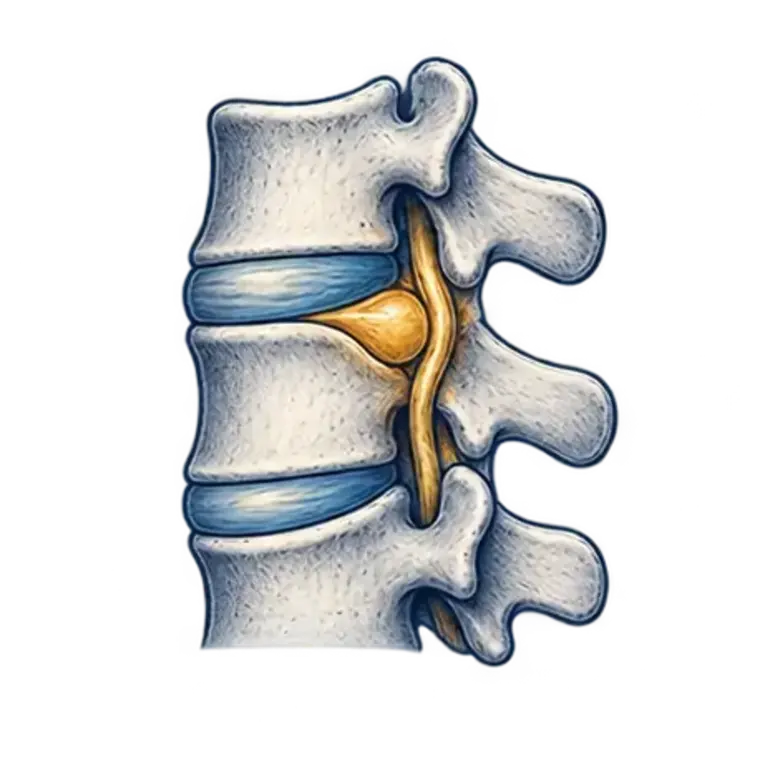
Understanding the Condition
Spinal discs sit between the vertebrae and help distribute load. Each disc has a tougher outer ring surrounding a softer center. A broad bulge describes disc tissue extending outward over a wider area; a herniation is a more focal displacement of disc material. Either may occur in the neck or lower back.
A disc finding does not automatically explain pain. Some people have disc changes on imaging without symptoms, while others develop pain when nearby nerve tissue becomes irritated or compressed. That is why treatment should be based on the whole clinical picture—not an MRI phrase alone.
Signs & Patterns
Symptoms differ by spinal level, severity, activity, and the structures involved. This list is educational and is not a diagnosis.
Disc-related pain may remain near the neck or lower back and can vary with posture or loading.
Irritation of a nearby nerve can create radiating pain, tingling, numbness, or weakness.
Sitting tolerance, lifting, sleep, walking, work, or exercise may become more difficult.
Seek prompt medical evaluation for new bowel or bladder difficulty, numbness around the saddle region, rapidly increasing weakness, major trauma, fever with severe spinal pain, unexplained systemic symptoms, or sudden loss of balance or coordination.
Individual Evaluation
The purpose of the first visit is to determine the most likely pain generator, identify safety considerations, and establish whether conservative care is reasonable.
A detailed history of onset, aggravating positions, prior episodes, and the path of any radiating symptoms.
Movement, orthopedic, and neurological testing—including strength, reflexes, and sensation when indicated.
Review of existing imaging and consideration of additional imaging only when clinically appropriate.
Screening for findings that require medical, neurological, or surgical referral rather than decompression.
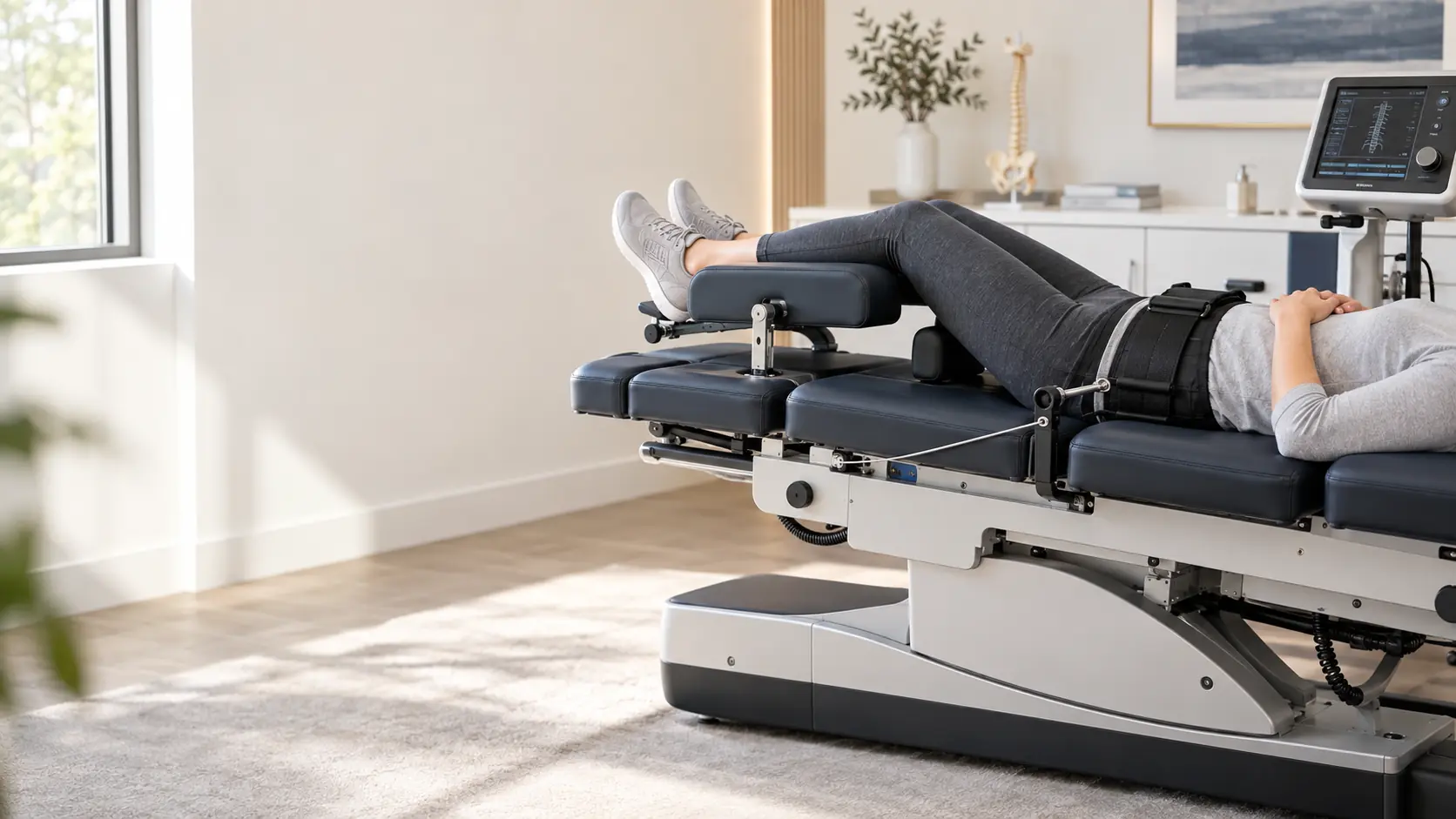
Where Decompression May Fit
Decompression may be considered for a stable, appropriately screened disc presentation when the goal is to modify mechanical loading and improve tolerance for movement. It is usually one part of a broader plan rather than a stand-alone promise.
Research on traction shows possible short-term benefit in selected lumbar presentations, while study quality, patient selection, and long-term evidence remain limited. Individual results vary.
A Deliberate Process
Review your history, symptoms, neurological status, prior care, imaging, and goals.
If appropriate, begin with tolerable settings and clear measures of function and symptom response.
Continue, modify, combine, or refer based on meaningful progress—not a preset package.
Questions Patients Ask
The terms describe different patterns of disc displacement, although they are often used interchangeably in conversation. The more important question is whether the finding matches your symptoms and examination.
Not everyone needs new imaging. Existing studies, symptom behavior, neurological findings, trauma history, and other risk factors help determine whether imaging is clinically appropriate.
It should not be presented as a guarantee that a disc will be physically “put back.” The clinical goal is to use controlled traction as part of a conservative plan and monitor whether pain and function improve.
Many disc-related presentations are initially managed conservatively, depending on severity and neurological findings. Progressive weakness, bowel or bladder changes, or other urgent findings require prompt medical evaluation.
There is no responsible preset answer. Recommendations depend on the examination, symptom irritability, response to early sessions, functional goals, and whether measurable progress continues.
Continue Learning
Content is educational, not a diagnosis or guarantee of outcome. Last reviewed 2026-09-14.
A personalized evaluation is the first step toward determining whether decompression—or another path—fits your case.