
Sensory pattern
Tingling or numbness may follow part of the arm or specific fingers.
Neck & Nerve · Chino Hills, CA
Cervical radiculopathy occurs when a nerve root in the neck becomes irritated or compressed. Because shoulder, peripheral nerve, and spinal-cord conditions can overlap, accurate screening comes before cervical decompression.
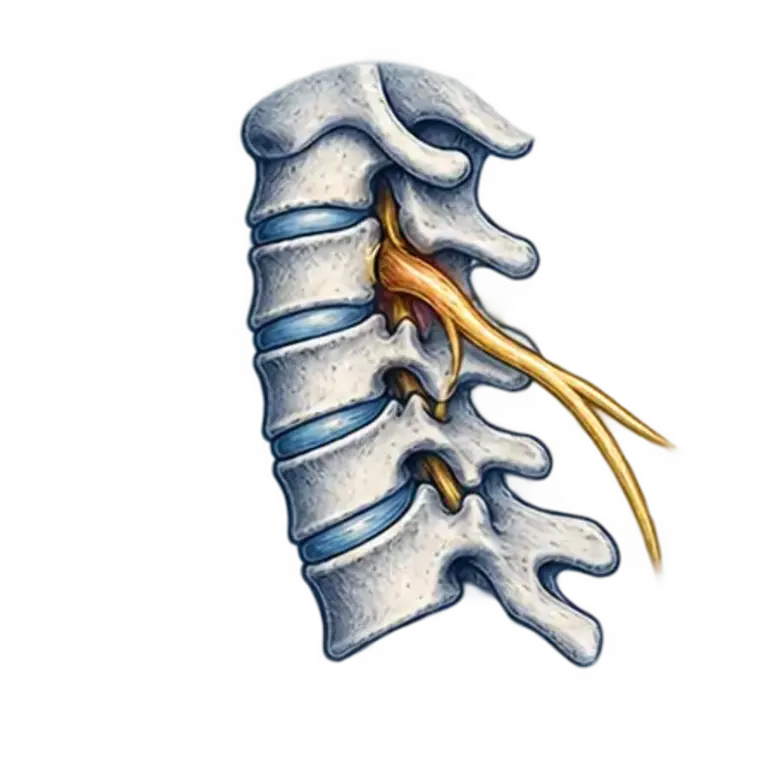
Understanding the Condition
Nerve roots leave the cervical spine through small openings and carry motor and sensory information to the upper body. A disc herniation, arthritic change, or narrowing can irritate a root and produce symptoms along a recognizable—but not always textbook—path.
Not every arm symptom comes from the neck. Shoulder disorders, carpal tunnel syndrome, ulnar nerve irritation, thoracic outlet presentations, and other conditions can overlap. Examination is designed to identify the most likely source and to screen for spinal-cord involvement.
Signs & Patterns
Symptoms differ by spinal level, severity, activity, and the structures involved. This list is educational and is not a diagnosis.
Tingling or numbness may follow part of the arm or specific fingers.
A particular nerve root can affect strength in the shoulder, arm, wrist, or hand.
Balance change, hand clumsiness, widespread symptoms, or abnormal gait require prompt medical assessment.
Seek prompt medical evaluation for new bowel or bladder difficulty, numbness around the saddle region, rapidly increasing weakness, major trauma, fever with severe spinal pain, unexplained systemic symptoms, or sudden loss of balance or coordination.
Individual Evaluation
The purpose of the first visit is to determine the most likely pain generator, identify safety considerations, and establish whether conservative care is reasonable.
Clarify the route of symptoms and whether neck, shoulder, elbow, wrist, or hand positions change them.
Assess cervical motion, strength, reflexes, sensation, neural tension, shoulder function, and hand dexterity.
Review imaging when clinically appropriate and correlate it with the suspected nerve level.
Screen carefully for myelopathy, instability, trauma, vascular concerns, or other reasons cervical traction may be inappropriate.
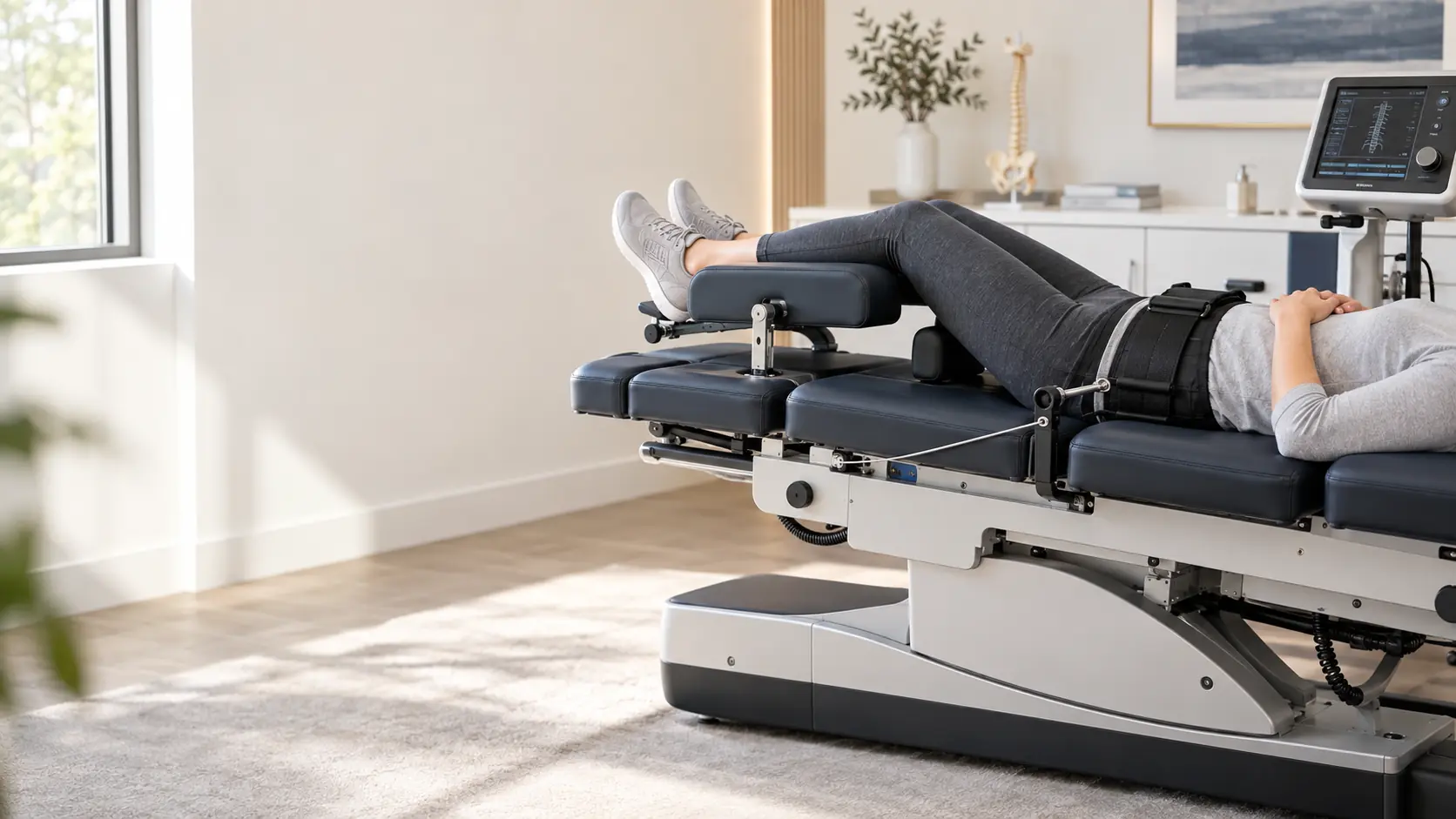
Where Decompression May Fit
Cervical decompression may be considered when findings support a stable mechanical nerve-root presentation and screening does not reveal spinal-cord or other high-risk involvement. Settings are generally lighter and tailored specifically to the neck.
Research on traction shows possible short-term benefit in selected lumbar presentations, while study quality, patient selection, and long-term evidence remain limited. Individual results vary.
A Deliberate Process
Review your history, symptoms, neurological status, prior care, imaging, and goals.
If appropriate, begin with tolerable settings and clear measures of function and symptom response.
Continue, modify, combine, or refer based on meaningful progress—not a preset package.
Questions Patients Ask
Yes. Cervical nerve roots supply sensation and strength to parts of the arm and hand, although peripheral nerve and other conditions can cause similar symptoms.
They involve different locations of nerve irritation. Examination of the neck, upper limb, strength, reflexes, sensation, and symptom behavior helps distinguish or identify overlapping problems.
No. Decompression applies a controlled traction-and-release force. An adjustment is a separate manual procedure with a different purpose and application.
Imaging is considered according to trauma history, neurological findings, symptom duration, progression, prior care, and whether the result would change management.
Seek prompt medical assessment for increasing weakness, significant balance change, loss of hand dexterity, symptoms affecting both arms and legs, new bowel or bladder changes, major trauma, or severe systemic symptoms.
Continue Learning
Content is educational, not a diagnosis or guarantee of outcome. Last reviewed 2026-09-14.
A personalized evaluation is the first step toward determining whether decompression—or another path—fits your case.